
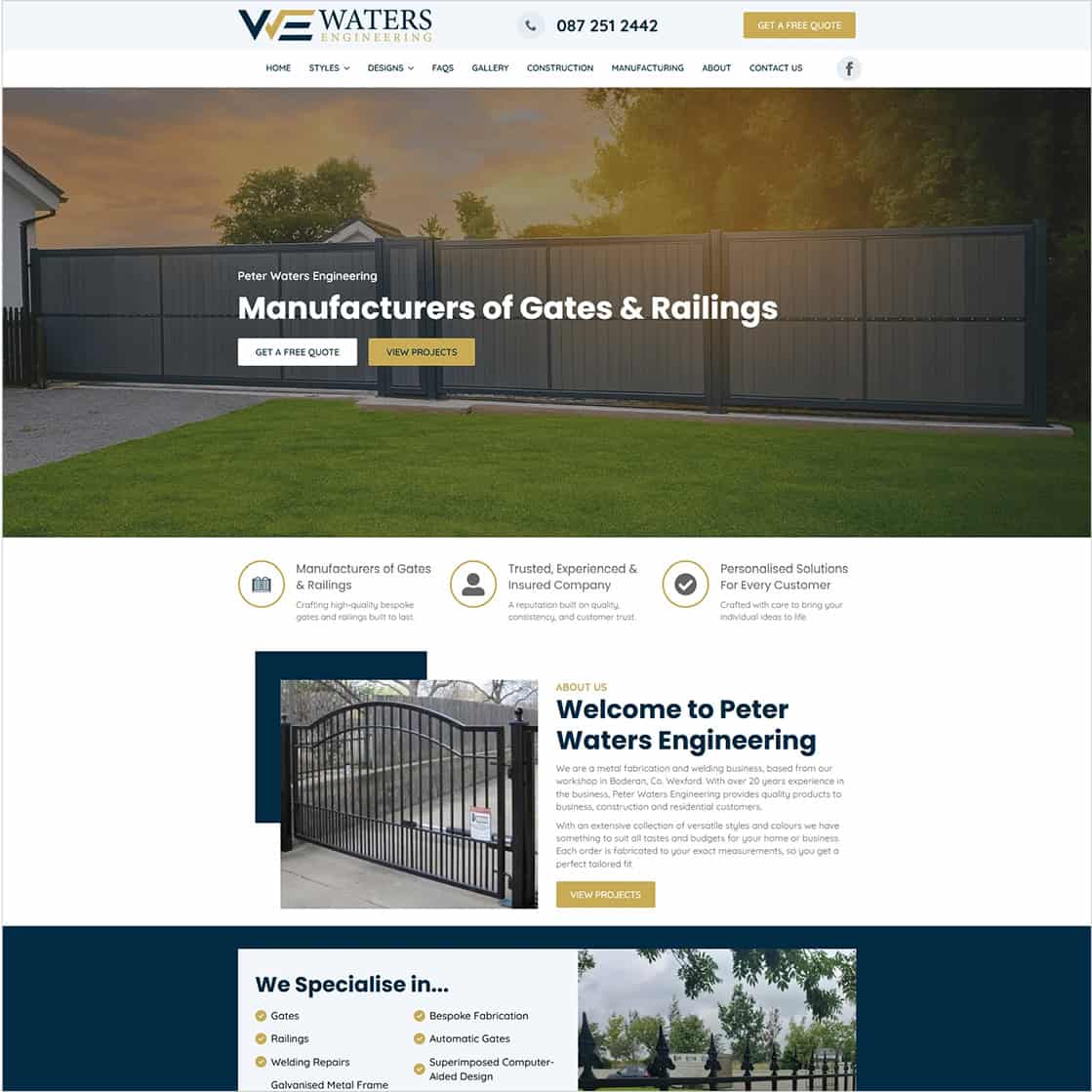
A website redesign gives you a chance to review how your business is presented online. For a Wexford business, that might mean clearer service pages, a more useful project gallery or an easier way to request a quote. Start with the problems you need to solve, then agree what should stay and what needs to change.
Project pictured: Peter Waters Engineering. Website design and build by Istech.
This guide covers the decisions to make before asking for a redesign quotation, the information to prepare and the checks to include before launch.
In this guide: Refresh or rebuild · What to keep · Page addresses and SEO · Content and credits · A Wexford project example · Testing and launch · Ongoing care · Your redesign brief
Write down the issues you can see. Are service descriptions out of date? Is the navigation difficult to follow on a phone? Does the enquiry form ask for the wrong information? Has the business added services that the website does not explain?
Some problems may be addressed by improving existing pages. A wider rebuild may be appropriate when the structure, editing system or required functionality needs substantial change. Ask your designer to explain which approach fits your brief and what it includes. If WordPress is part of the proposal, our WordPress web design guide explains the service in more detail.
Separate essential work from later additions. Agree who supplies text and photographs, how many pages are included, which integrations need attention and who approves the finished work. Our website design cost guide can help you prepare questions about scope and pricing.
A new appearance does not mean every page needs replacing. Make a list of existing page addresses, service information, useful downloads, photographs and contact routes. Mark each item to keep, update, combine or remove, with a reason for the decision.
Where you have access to analytics and Search Console, review the available information alongside actual enquiries and customer questions. A page with modest traffic may still explain an important service. Record a baseline so you can compare the site after launch, while recognising that visits and enquiries measure different things.
Check who controls the domain, hosting, website and connected accounts. Confirm that the right people can provide access when required, using the agreed secure process. Identify any forms, booking tools, shop functions or email connections that the redesign must preserve.
Keep useful page addresses where they still fit. If an address must change, map the old page to its relevant replacement and arrange a permanent redirect directly to that destination. Avoid sending every removed page to the homepage.
Before launch, check internal links, canonical addresses, the sitemap and any temporary indexing restrictions used during development. After launch, check redirects and errors and monitor Search Console. Search visibility can fluctuate while Google processes changes; a redesign does not guarantee that rankings will stay the same or improve.
Google’s guidance on site moves with URL changes sets out these migration checks. Agree who is responsible for them as part of the project scope.
Prepare clear descriptions of the services you currently provide, the areas you serve and how customers should contact you. Check names, opening hours, prices where shown and contact details before approval. Give each page a useful purpose rather than repeating the same wording across several pages.
Use genuine project photographs with permission to publish them. Confirm captions, client approval and credits for any other designers, photographers or suppliers involved. Describe what the website contains and what each contributor did. Only include claims about traffic, rankings or enquiries when you have reliable evidence to support them.
Our Peter Waters Engineering case study shows useful ways to present a local business’s work. Based in Boderan, Co. Wexford, the business has a website with gate and railing styles, a project gallery and guidance on what to send when requesting a quote, including approximate dimensions, photographs, design ideas and location.
The project was designed and built by Istech. When planning your own redesign, consider which project categories and quote instructions would help a visitor explain their needs.
Review the actual pages on desktop and mobile, including navigation, headings, photographs, buttons and contact links. Check that text is readable, images fit their space and important actions are easy to find. Review long pages as well as the homepage.
For forms, agree a test with the intended recipient. Check required fields, validation, confirmation messages and delivery to the correct inbox. A successful screen message alone does not confirm that the enquiry arrived. Our quote request form planning guide covers the information and routing to agree.
Set a launch checklist with named responsibilities, a backup and a way to restore the previous site if needed. Confirm the launch date, approval process and checks to repeat on the live site. Allow time for content feedback and testing; our web design timeline guide explains the planning stages.
Confirm who will keep business information current and who will handle technical maintenance. Include access and handover arrangements, renewal responsibilities and any agreed support in the quotation.
Our technical maintenance is billed yearly. Content work and ongoing SEO are quoted separately, with hosting identified separately in the quotation. Read our Website Maintenance & Care Plans page when deciding what support to arrange after launch.
Planning a website redesign in Wexford? Explore our web design service or contact Istech with your current website address and brief so we can discuss the scope.