
Before a website build or redesign, prepare the information each page needs. This website content checklist gives Wexford businesses a practical way to organise text, photographs, project examples and approvals before the work begins.
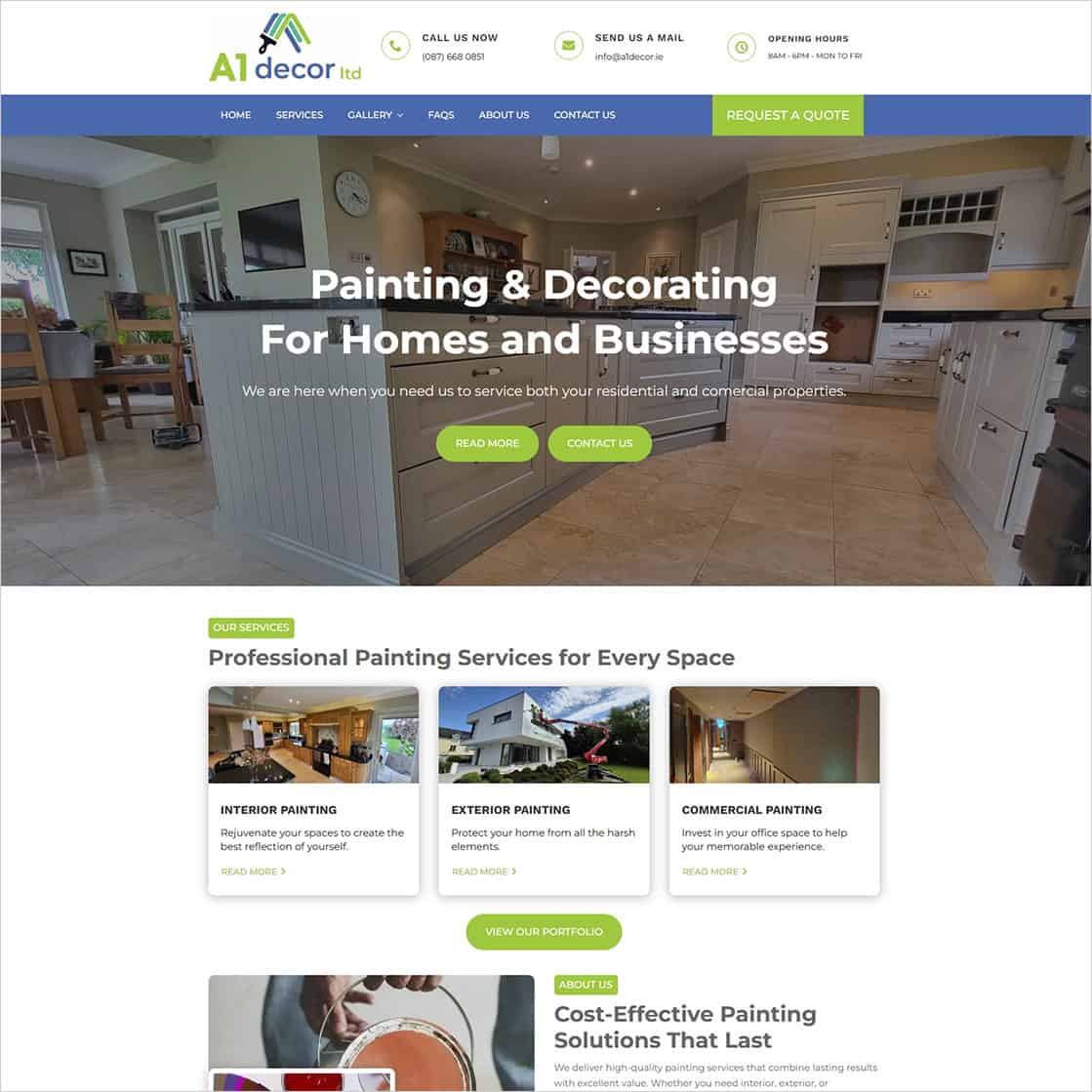
Project pictured: A1 Decor Ltd, Ballyragget, Co. Kilkenny. Website design by Istech Web Design.
Start with the page suggestions below, then copy the worksheet for each agreed page. Mark missing items and who will supply them so your designer can quote and plan around the actual requirements.
In this guide: Agree your pages · Prepare each page · Verified examples · Images and credits · Writing and links · Approval responsibilities · Ongoing changes · Copy the worksheet
List the pages your customers need and the main question each should answer. Identify the action you want a visitor to take, such as reading about a service, requesting a quote or viewing products.
For a redesign, note which existing pages and photographs should be kept, updated or removed. Our Website Redesign in Wexford guide covers the wider planning checks. Confirm the page list and content responsibilities in the quotation; our website package comparison guide explains the scope to clarify.
For a shop or booking website, also prepare the product or service records, categories, availability information and customer instructions required for the agreed features. Check these details with the person responsible for running that part of the business.
Our A1 Decor Ltd case study shows a service-business example from Ballyragget, Co. Kilkenny. Its live services page distinguishes Interior Painting, Exterior Painting, Painting for New Builds, Wallpapering and Commercial Painting, with routes to examples of the company’s work. The live website credits Website Design by Istech Web Design.
For your own brief, identify the actual services to explain and which approved photographs illustrate each one. Give the designer the context for each image, including the type of work and any caption or credit to use.
Edward White Models trades online as Toymodels.ie and has a physical shop in Duncormick, Co. Wexford. Its catalogue includes Farm, Construction and Scenery categories. The Visit Our Shop page states that visits are strictly by appointment and provides a call or booking-request route.
Our Edward White Models / Toymodels.ie case study explains these content routes. The live website credits Web Design By Istech. For a similar brief, prepare both the product information and the practical instructions for visiting or contacting the business.
Provide the agreed logo files and original photographs where available. Use clear file names and supply a short note explaining each image, where it should appear and who needs credit. Confirm permission to publish customer projects, photographs, names and feedback before handing them over.
Keep testimonial quotes and their approved attributions together. Check project dates, locations, services and contributor roles. Describe what was done and by whom; include results only where reliable evidence supports them. Identify placeholder text or images so they can be replaced before approval.
Use plain descriptions and headings that accurately summarise the content. Explain unfamiliar terms and answer the practical questions customers ask before they contact you. Google’s helpful content guidance provides questions for reviewing usefulness, accuracy and first-hand knowledge.
Plan relevant links between pages, such as a service description linking to a related project or contact instructions. Give each link a clear label. Agree who will prepare the page titles, headings and other SEO setup included in the build; Google’s SEO Starter Guide provides background.
For every page, identify who supplies the facts, who writes or edits the copy and who gives final approval. Keep one current version and return combined feedback so corrections and decisions are clear.
Our Web Design Wexford service explains that reviewing text, planning pages and writing or editing work can be agreed in the quotation. Confirm the support included before assuming the designer will produce every item. If you will edit the site afterwards, discuss access and guidance through our WordPress web design service.
Agree content deadlines and review dates around the project schedule. Our web design timeline guide explains the stages and responsibilities to plan.
Nominate someone to keep service information, contact details, photographs and project examples current. Record who can approve changes and how additional work will be requested.
Our technical maintenance is billed yearly. Content work and ongoing SEO are quoted separately, with hosting identified separately in the quotation. Read our Website Maintenance & Care Plans page when agreeing ongoing responsibilities.
Complete these fields in a shared document or your project brief:
Review the completed pages on desktop and mobile before approval, checking text, photographs, captions and links together. Planning a new website or redesign? Contact Istech with your page list, available content and the support you need so we can discuss the scope.